Learn
Joint Glide Guides: Joint Health Basics and Choosing a Supplement
Start with the joint support guide for the basics of cartilage and connective tissue, then read the guide to choosing a joint supplement. Three blog posts go deeper on doses, willow bark and supplement testing. The glossary below explains 11 common terms, and the claim checklist shows how to compare any label, including Joint Glide, with the doses used in research.
Start here
What do the Joint Glide guides cover?
The guides explain how joints work and how to judge a joint supplement label. They use Joint Glide as a worked example, but the same checks apply to any brand.
There are two long guides and three shorter blog posts. Each one links its sources, mostly from NIH, CDC and FDA.
You do not need a science background. Terms are explained in the glossary further down, in plain words. Pick a reading path by goal near the end if you are short on time.
The two guides
Which Joint Glide guide should you read first?
Read the basics first if joints are new to you. Go straight to the buying guide if you are comparing labels.
Joint health basics
How cartilage, bone and connective tissue fit together, what changes with age, and why daily movement matters. Read the joint support guide.
Choosing a supplement
How to read Supplement Facts, spot a proprietary blend, compare doses and check a guarantee before you buy. Read how to choose a joint supplement.
From the blog
What do the Joint Glide blog posts explain?
Label doses versus research
Each Joint Glide amount set beside the dose used in published studies. See Joint Glide doses vs research.
Willow bark and aspirin
Why white willow bark belongs to the aspirin family and who should ask a doctor first. See white willow bark and aspirin.
Lead, turmeric and lab tests
What a turmeric lead study teaches about supplement testing, and what a real lab report shows. See turmeric, lead and testing.
Glossary
Joint health and supplement words, explained
Eleven terms you will meet on labels, in studies and across our guides.
| Term | What it means | Where it shows up in Joint Glide |
|---|---|---|
| Cartilage | Smooth, firm tissue that covers bone ends so they glide | The tissue the label claims point toward |
| Connective tissue | Tissue that holds the body together: cartilage, tendons, ligaments | Label claim: "Helps Support Connective Tissue" |
| Osteoarthritis | A condition that breaks down one or more joints (CDC, Osteoarthritis) | Studied in ingredient trials; not a claim of the product |
| Glucosamine | A compound found in cartilage; sold as a supplement (NCCIH, Glucosamine) | 200 mg glucosamine hydrochloride |
| MSM | Methylsulfonylmethane, a sulfur compound (Kim et al., 2006) | 300 mg |
| Harpagoside | The main active compound studied in devil's claw (Oltean et al., 2014) | Not stated on the label |
| Salicin | The willow bark compound the body turns into a salicylate (Chrubasik et al., 2000) | Not stated on the label |
| Proanthocyanidins | Plant compounds found in pine bark and grape seed | Pine bark extract standardized to 95% |
| Piperine | The black pepper compound that changes how other compounds are absorbed (Shoba et al., 1998) | 10 mg extract, about 9.5 mg piperine |
| Daily Value (DV) | A reference amount for a day, shown as a percent on labels | Set for B6, magnesium, zinc and copper only |
| Upper limit (UL) | The most of a nutrient most adults can take daily without likely harm (NIH ODS, Copper) | Copper 2 mg versus a 10 mg upper limit |
Joint basics
What is inside a joint, in plain words?
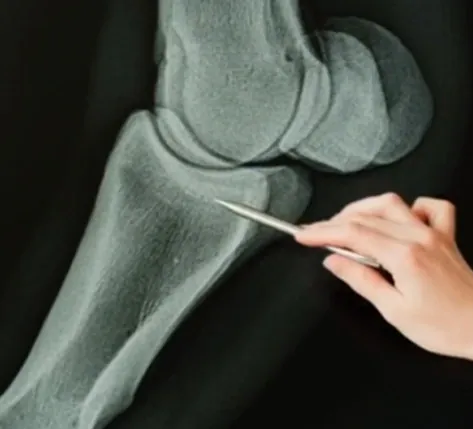
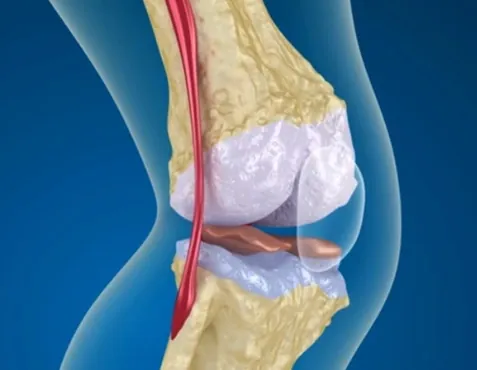
A joint is where two bones meet. Cartilage caps the bone ends, a thin fluid keeps them slick, and ligaments and tendons hold the parts in place.
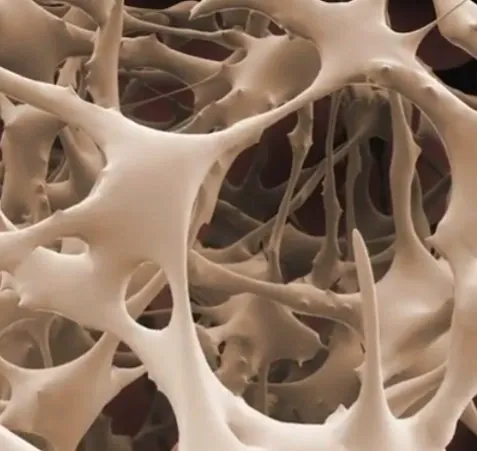
Under the cartilage, bone is not solid all the way through. Much of it is a spongy mesh that is light but strong.
Osteoarthritis is the most common joint condition. It breaks down one or more joints over time (CDC, Osteoarthritis). Regular activity can reduce joint pain and improve function, and the CDC suggests 150 minutes a week plus two days of strength work (CDC, Activity and arthritis).
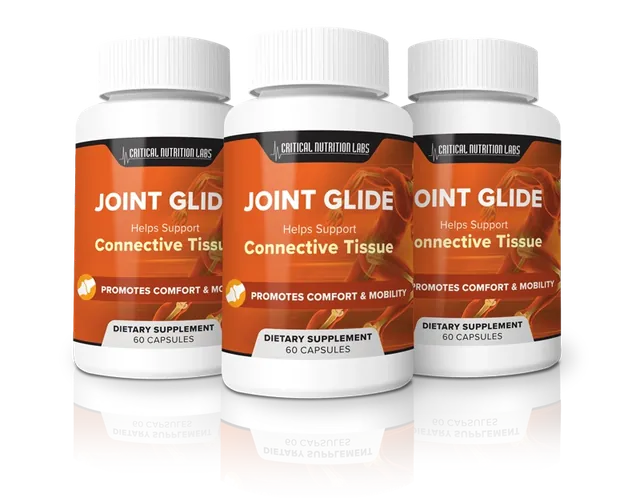
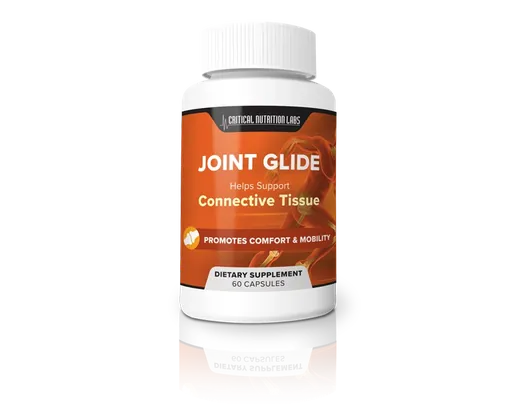
No supplement replaces that movement. A supplement such as Joint Glide is made to help support connective tissue and promote comfort and mobility alongside it.
Claim checklist
How do you read joint supplement claims?
Six checks that work on any label. Each takes a minute with the bottle in your hand.
Find every amount
Look at the Supplement Facts panel. A proprietary blend hides the amounts; a full panel lists each one.
Compare to research doses
Match each amount to the daily dose used in studies. A small share of the studied dose is a weak point.
Check the active compound
For herbs, look for the key compound, such as harpagoside or salicin. A powder weight alone cannot be compared.
Read the claim wording
Supplements may make structure or function claims, such as "supports connective tissue". A supplement may not claim to treat or cure a disease, so that wording is a red flag.
Ask for the lab report
A "lab tested" icon is not a report. Look for a named lab and a batch-specific certificate.
Check the refund terms
Note how many days you get, who pays return shipping and how you claim.
Badges need the same care. A seal on a bottle describes what the brand says about itself. It is not a review by an outside group unless that group is named and its report is public.
Worked example
How does Joint Glide look when you apply these checks?
It passes some checks and falls short on others. Every amount is disclosed, which makes the dose check possible in the first place.
Passes
- Full Supplement Facts panel with no proprietary blend
- Pine bark at 150 mg, the dose used in knee trials of a related extract (Cisár et al., 2008)
- Claims stay within structure and function wording
- 60-day money-back guarantee, claimed by phone
Falls short
- Glucosamine at 200 mg, about 13% of the 1,500 mg used in the GAIT trial (Clegg et al., 2006)
- MSM at 300 mg, about 5-9% of trial doses
- Harpagoside and salicin content not stated
- No third-party lab report and no trial of the finished formula
Reading paths
Which reading path fits your goal?
Pick the goal closest to yours and read the pieces in this order.
Learn the basics
Start with the joint support guide. Then read the glossary above. Finish with the choosing guide.
Judge a product
Start with the choosing guide. Then read the doses post. Use the six checks above on each bottle.
Check safety first
Start with the willow bark post. Then take the label to your pharmacist before you order anything.
Curious about contamination and testing? The turmeric post covers lead in spices. Joint Glide contains no turmeric, but the testing lessons carry over.
Updates
How are the Joint Glide guides kept current?
Each guide is checked when the label, the price or a key study changes. The last full review was September 24, 2026.
If a source moves or a number looks wrong, email [email protected] with the link. New posts appear on the blog first and are added to this hub when they fit a reading path.
FAQ
Questions about the Joint Glide guides
Which Joint Glide guide should I read first?
Start with the joint support guide if you want the basics. Start with the choosing guide if you are comparing labels.
Are the Joint Glide guides medical advice?
No. They explain general facts and link their sources. Ask your doctor about your own joints and medicines.
Why do the guides mention Joint Glide's weak spots?
Because a fair comparison needs them. The small glucosamine and MSM doses matter when you judge any label.
What is a proprietary blend?
A single total weight for several ingredients, with no amount for each one. Joint Glide does not use one.
Does Joint Glide contain turmeric?
No. The turmeric post uses a lead study to explain supplement testing in general.
What does 222% DV for copper mean?
Two capsules give 2 mg of copper, a bit over twice the daily reference amount. That is still well under the 10 mg upper limit (NIH ODS, Copper).
How often are the guides updated?
When the label, price or a key study changes. The date at the top shows the latest review.
Keep reading
More about Joint Glide
Joint support guide
Cartilage basics, the habits with real evidence, a 10-minute morning routine and an honest view of supplements.
Read more
Choosing a joint supplement
Ten checks for any joint supplement label, plus an honest pass, partial or fail score for Joint Glide.
Read more
Blog
Plain-language articles about Joint Glide: its doses next to the research, willow bark and aspirin safety, and a morning mobility routine.
Read moreUSA authorized Joint Glide retailer
Ready to try Joint Glide with the 60-day guarantee?
Order through the authorized retailer page so your order ID is on file with the refund desk. One bottle is $69.00 plus $7.99 shipping on the order page; 3 and 6-bottle prices are shown at checkout.
Questions before you buy? Call +1 (727) 351-3065. 60-day money-back guarantee, return shipping paid by the buyer.