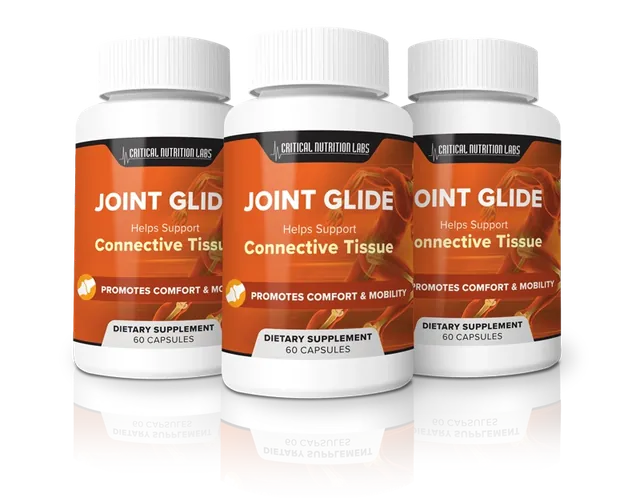
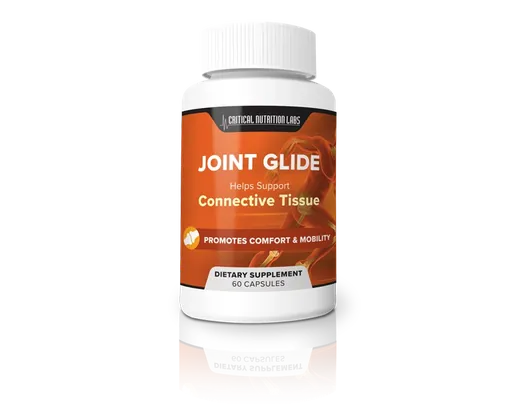
How it works
How Does Joint Glide Work? Support for Your Connective Tissue
Joint Glide works by supplying nutrients and plant extracts that support connective tissue, comfort and mobility.
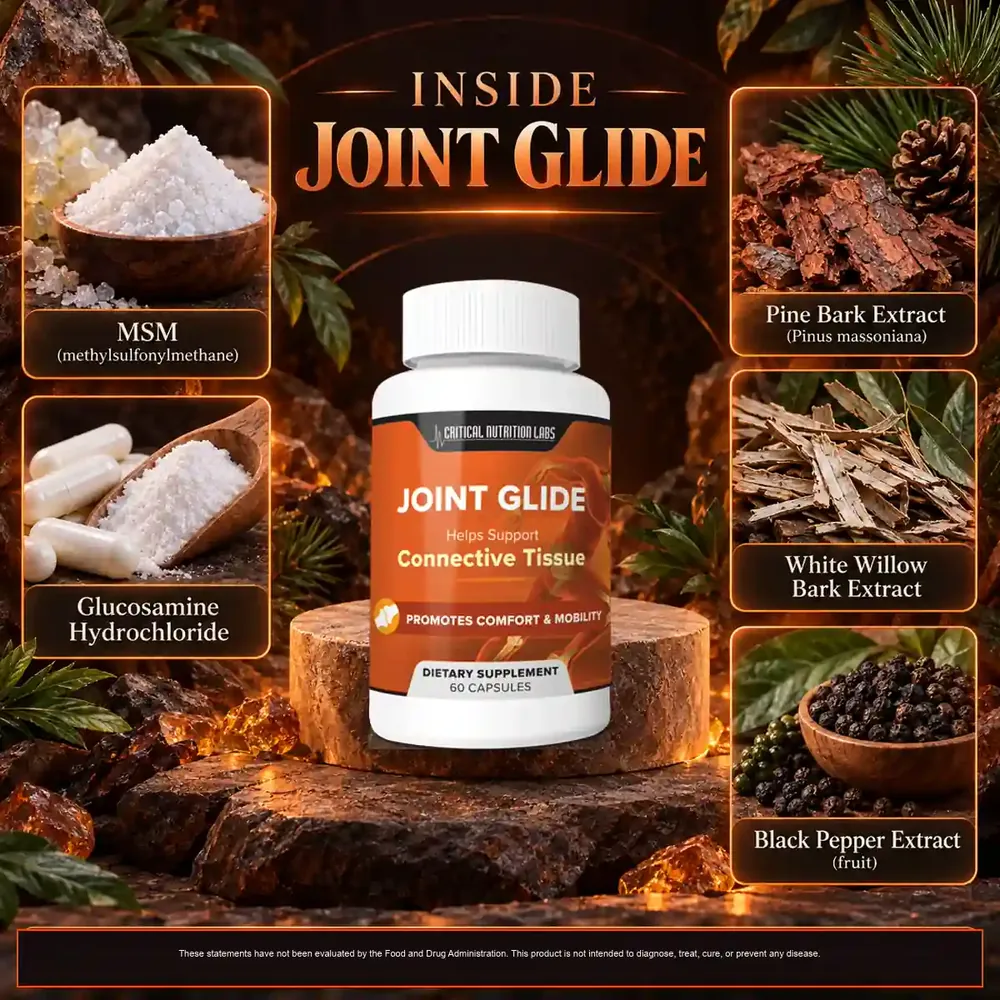
It pairs cartilage building blocks (glucosamine, MSM) with devil's claw, willow bark, pine bark, black pepper extract and four nutrients the body uses in collagen. You take 2 capsules each morning.
See every amount on the Joint Glide ingredients page.
In short
How is Joint Glide supposed to work?
Joint Glide combines three groups of ingredients around one goal: everyday support for the tissue that holds joints together. It is not a pain reliever and does not act like a drug.
The idea is supply, not repair. Some ingredients are raw materials the body already uses in cartilage. Others are plant extracts that researchers have tested for comfort. A few nutrients round out the formula. The label sums it up in two claims: "Helps Support Connective Tissue" and "Promotes Comfort & Mobility".
For the full list with amounts, see every Joint Glide ingredient.
The basics
What is cartilage, and why does it matter for Joint Glide?
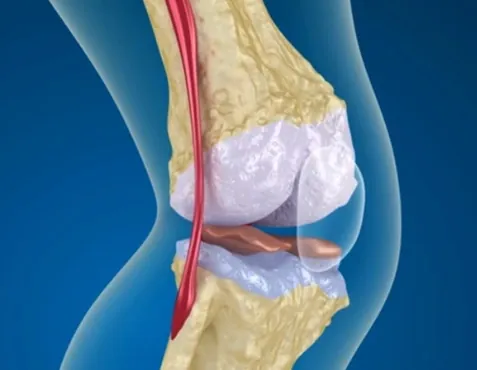
Cartilage is the smooth, rubbery layer that covers the ends of bones inside a joint. It lets bones glide over each other instead of grinding.
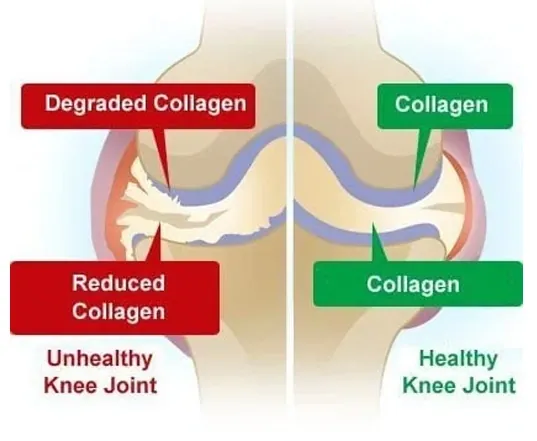
Cartilage is a kind of connective tissue. So are tendons, which tie muscle to bone, and ligaments, which tie bone to bone. All of them rely on collagen, a rope-like protein, plus water-holding sugars built partly from glucosamine.
With age and wear, cartilage can thin. In osteoarthritis, one or more joints break down over time (CDC, Osteoarthritis). Joint Glide does not claim to change that. It aims to support the tissue you have.
The science
What do enzymes have to do with joint wear?
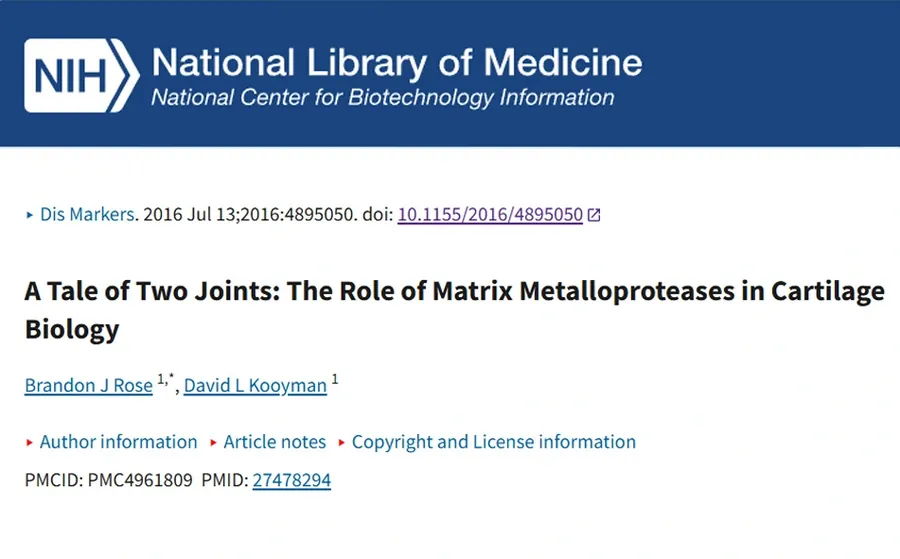
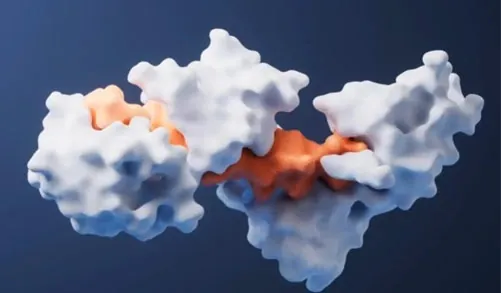
The body constantly breaks down and rebuilds cartilage, and enzymes do the breaking down. A group called matrix metalloproteinases, or MMPs, cut up collagen and other cartilage parts.
A 2016 review describes how MMPs become overactive in osteoarthritis (Rose & Kooyman, 2016). The Joint Glide sales video shows this paper on screen. It is real, and it is listed by the National Library of Medicine.
The review explains cartilage biology. It did not test Joint Glide or any of its ingredients. Mentioning it helps explain the idea, not prove a result.
The formula logic
Why were these Joint Glide ingredients chosen?
Building blocks
Glucosamine and MSM supply material found in cartilage and connective tissue.
Plant ingredients
Devil's claw, white willow bark and pine bark have been studied for back and joint comfort.
Helpers
Black pepper extract, plus B6, magnesium, zinc and copper that the body uses daily.
One by one
How is each Joint Glide ingredient thought to work?
Each ingredient has a proposed role based on research into that single ingredient. None of these roles has been tested in the finished Joint Glide capsule.
| Ingredient | Proposed role in plain words | Source |
|---|---|---|
| Glucosamine HCl | A natural building block of cartilage's water-holding sugars | (Clegg et al., 2006) (NCCIH, Glucosamine) |
| MSM | A source of sulfur, which cartilage and collagen use | (Kim et al., 2006) (Debbi et al., 2011) |
| Devil's claw root | Harpagoside, the compound researchers measure when testing it for back comfort | (Oltean et al., 2014) |
| White willow bark | Salicin turns into salicylic acid in the body, a relative of aspirin | (Chrubasik et al., 2000) |
| Pine bark extract | Proanthocyanidins, plant antioxidants studied for knee stiffness | (Cisár et al., 2008) (Farid et al., 2007) |
| Black pepper extract | Piperine can raise how much of other compounds the body absorbs | (Shoba et al., 1998) |
| Copper and zinc | Used by enzymes, including ones that form connective tissue | (NIH ODS, Copper) (NIH ODS, Zinc) |
| Magnesium and B6 | Everyday nutrients for muscles, nerves and metabolism | (NIH ODS, Magnesium) (NIH ODS, Vitamin B6) |
Because willow bark is a salicylate, anyone on aspirin or a blood thinner should read Joint Glide side effects first.
Sales-video pictures
What do the Joint Glide sales video's pictures really show?
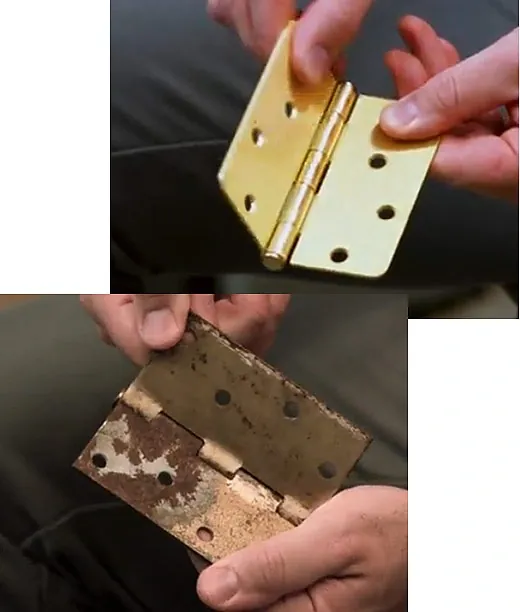
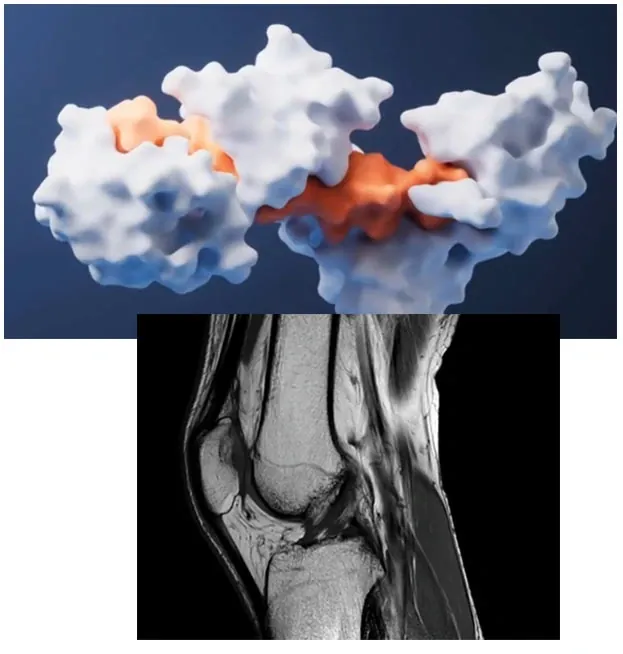
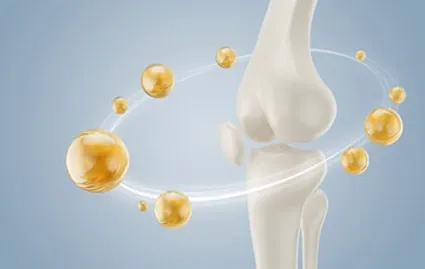
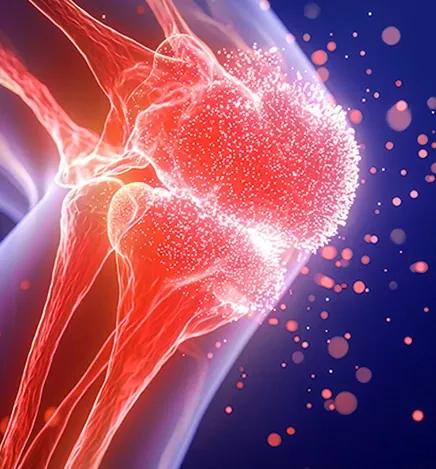
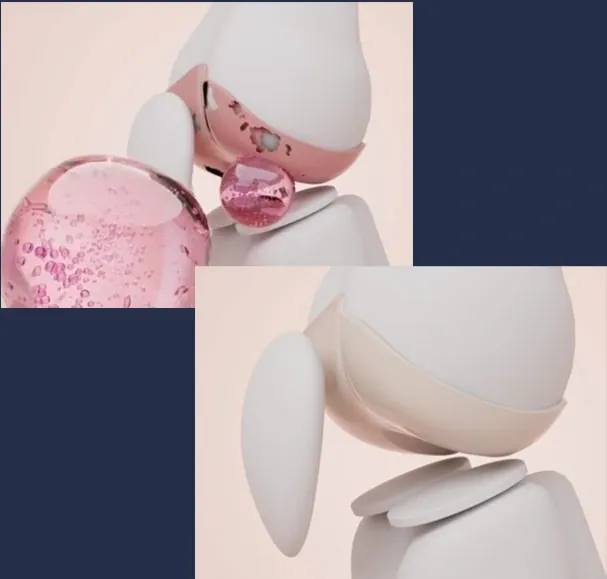
The sales video explains joints with metaphors: rust, hinges, keys and frayed rope. They are illustrations. None of them shows real biology or proof that Joint Glide works.


Amounts
Are Joint Glide amounts close to what studies used?
Some are and some are not. Pine bark matches trial doses, while glucosamine and MSM sit well below them. The bars show each label amount as a share of the research dose.
Bars show the label amount as a share of the dose used in research. Striped bars mean the label does not state the active compound, so it cannot be compared.
For the table version with every study dose, see the Joint Glide Supplement Facts.
Daily routine
How do you take Joint Glide so it works as intended?
Take it the same way every day. The formula is built around one serving of 2 capsules in the morning, not a dose you take only on sore days.
Morning, with food
Take 2 capsules each morning with 8 oz of water and a few bites of food. Taking capsules with food may be easier on the stomach.
Every day
Building-block ingredients such as glucosamine are studied as daily, long-term habits, not quick fixes.
Stick to the label
Doubling up does not match the panel, and it doubles the willow bark too.
Tips on timing, travel and missed doses are in how to take Joint Glide.
Limits
What can Joint Glide not do?
Joint Glide cannot diagnose, treat or reverse any joint condition. It does not rebuild cartilage, and it is not a replacement for medicine a doctor prescribed.
Regular activity can reduce joint pain and improve function. The CDC suggests 150 minutes of moderate activity a week plus two days of strength work (CDC, Activity and arthritis). A supplement fits alongside that, not instead of it.
- Keep seeing your doctor or physical therapist
- Give any change a fair trial, then judge it honestly
- Use the 60-day guarantee if it is not for you
How long to wait before judging is covered in the Joint Glide results timeline.
FAQ
How Joint Glide works: FAQ
Does Joint Glide rebuild cartilage?
No. The label claims only to help support connective tissue and promote comfort and mobility. No study has shown it rebuilds cartilage.
Is Joint Glide a pain reliever?
No. It is a dietary supplement. Willow bark is related to aspirin, but Joint Glide is not sold or dosed as a pain medicine.
Why is black pepper extract in a joint formula?
Piperine changes how the body absorbs some compounds (Shoba et al., 1998). Formulas often add it for that reason.
Was the finished Joint Glide formula tested in a study?
No trial of the finished formula has been published. The research behind it looks at single ingredients.
Is the NIH paper in the sales video about Joint Glide?
No. It is a real review about cartilage enzymes (Rose & Kooyman, 2016). It does not mention Joint Glide.
Do I need to take it with food?
Yes. The suggested use is 2 capsules each morning with 8 oz of water and a few bites of food.
Keep reading
More about Joint Glide
Ingredients
All 10 Joint Glide ingredients with their label amounts, what each one is, and what research looked at.
Read more
Results timeline
No official Joint Glide timeline exists. A practical 60-day plan for judging it, and what to track.
Read more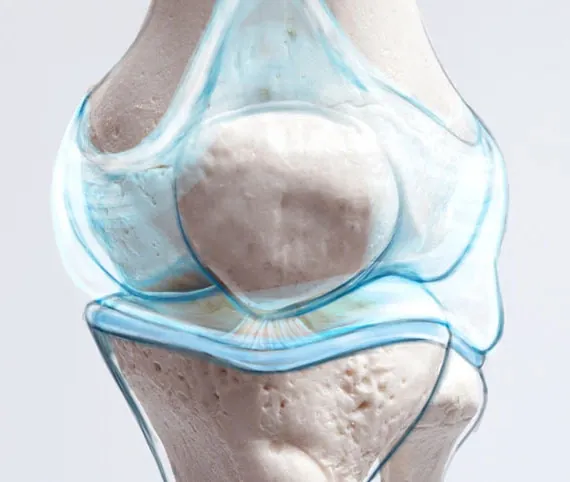
Benefits
The two Joint Glide label claims, the ingredients behind each one, and how strong the evidence is.
Read moreUSA authorized Joint Glide retailer
Ready to try Joint Glide with the 60-day guarantee?
Order through the authorized retailer page so your order ID is on file with the refund desk. One bottle is $69.00 plus $7.99 shipping on the order page; 3 and 6-bottle prices are shown at checkout.
Questions before you buy? Call +1 (727) 351-3065. 60-day money-back guarantee, return shipping paid by the buyer.