Safety
Is Joint Glide Safe? Side Effects, Interactions and Who Should Ask a Doctor First
For most healthy adults who follow the label, the likeliest side effect is stomach upset. The bigger questions are interactions. White willow bark is a salicylate like aspirin, glucosamine may add bleeding risk with warfarin, and devil's claw may affect blood pressure and blood sugar. Skip it under 18, in pregnancy, while nursing or with aspirin sensitivity.

Who should not take Joint Glide?
Start here, because the answer decides whether the rest matters. Joint Glide is meant for healthy adults who are 18 or older. These groups should skip it or ask first:
Skip it
- Anyone under 18
- Pregnant or nursing women
- People who are allergic or sensitive to aspirin
- People with gallstones or active stomach ulcers
Ask a doctor first
- You take warfarin or another blood thinner
- You take daily aspirin or another pain reliever
- You use blood pressure or diabetes medicine
- You have a shellfish allergy, because the glucosamine source is not stated
This is a starting point, not medical advice. Your doctor knows your history. Bring the bottle, or a photo of the Supplement Facts panel, so the review takes minutes.
Key facts on Joint Glide safety
- For healthy adults 18 and over only. Not for pregnancy, nursing or anyone under 18.
- Most likely effect: stomach upset. Take it with food and 8 oz of water.
- White willow bark is a salicylate. Skip it with aspirin sensitivity.
- Glucosamine may add bleeding risk with warfarin. Ask your doctor first.
- Devil's claw may affect heart rate, blood pressure and blood sugar. Avoid with gallstones or ulcers.
- Copper 2 mg and zinc 10 mg are under their upper limits alone. Watch your total from other products.
What side effects can Joint Glide cause?
Stomach upset is the effect most people would notice first. Some people feel mild nausea, heartburn or loose stools from plant extracts like devil's claw and willow bark. Magnesium from supplements can also loosen stools.
The label directions help: 2 capsules each morning, a full 8 oz glass of water and a little food. Do not add extra capsules, because that raises every ingredient at once.
You have a rash, swelling or trouble breathing, which may signal an allergy. Also stop and call your doctor if upset lasts more than a few days, or if you see black stools or have stomach pain. For severe symptoms, call 911.
Any supplement problem can also be reported to the FDA through its Safety Reporting Portal.
Is the white willow bark in Joint Glide like aspirin?
In one key way, yes. White willow bark contains salicin, which the body turns into a salicylate. Aspirin is in that same family (NCCIH, Musculoskeletal pain).
That is why the label amount, 150 mg of extract, matters more than it looks. The label does not state the salicin, so the true salicylate load cannot be worked out.
- If aspirin gives you a reaction, leave Joint Glide alone.
- Daily aspirin or other salicylates: the effects can stack, so ask first.
- Ibuprofen, naproxen and similar medicines are not salicylates, but both they and willow bark can irritate the stomach. Ask a pharmacist.
- Children and teens should not use it. Salicylates have a known link to Reye's syndrome in children (NINDS, Reye's syndrome), and the product is for adults only.
Our post White willow bark and aspirin goes deeper on this one ingredient.
Which ingredient carries which safety point?
Each concern ties to a specific line on the label. This table keeps them in one place.
| Ingredient | Concern | Who should ask first |
|---|---|---|
| White willow bark extract, 150 mg | Salicylate, in the aspirin family | Aspirin sensitivity, blood thinners, other pain relievers, under 18, pregnancy |
| Glucosamine hydrochloride, 200 mg | More bleeding risk with warfarin (NCCIH, Glucosamine); source not stated | Warfarin users, anyone with a shellfish allergy |
| Devil's claw root powder, 500 mg | May affect heart rate, blood pressure and blood sugar; avoid with gallstones or ulcers (NCCIH, Musculoskeletal pain) | Heart, blood pressure or diabetes medicine; gallstones; ulcers |
| Black pepper extract, 10 mg | Piperine can change how other compounds are absorbed (Shoba et al., 1998) | Anyone on a daily prescription |
| Copper 2 mg and zinc 10 mg | Under the upper limits on their own | People who also take multivitamins or mineral products |
| Pine bark extract, 150 mg | Not linked to liver injury (LiverTox, Pine bark) | General advice only |
Why does the warfarin question come up twice?
Because two ingredients point the same way. Glucosamine has been linked to more bleeding risk in people who take warfarin (NCCIH, Glucosamine). Willow bark is a salicylate, and combining salicylates adds to the total you take.
Put both in one capsule and the case for a doctor's check is clear. If you take a blood thinner, ask before the first dose, not after a week.
Surgery is a similar case. Tell your surgeon and anesthesia team about every supplement you take, including Joint Glide. Their timing matters more than any general rule.
Are the copper and zinc amounts a safety problem?
Not on their own. Copper at 2 mg is 222% of the Daily Value, yet it is one fifth of the 10 mg adult upper limit (NIH ODS, Copper). Zinc at 10 mg is a quarter of the 40 mg upper limit (NIH ODS, Zinc). Magnesium at 100 mg is under the 350 mg supplement limit (NIH ODS, Magnesium). Vitamin B6 at 0.5 mg is far under its 100 mg limit (NIH ODS, Vitamin B6).
The way to go over is stacking. Add up what you get from a multivitamin, a zinc lozenge and any other mineral product. Then count Joint Glide on top.
Can you take Joint Glide every day?
The label serving is daily: 2 capsules each morning. That is the intended routine, and a bottle is built around it. No upper age limit is printed for adults. No long-term safety study of the finished formula has been published, so "every day" means the label serving and nothing more.
If you miss a morning, skip that serving and take your usual 2 capsules the next day. Never double up to catch up. More on the routine is in How many Joint Glide capsules should you take a day?.
Keep the bottle out of reach of children. Store it somewhere cool and dry, and do not use it if the safety seal is damaged or missing.
What should you say to your doctor or pharmacist?
Bring the bottle
Show the Supplement Facts panel with all 10 amounts.
List everything
Include prescriptions, store-bought pain relievers and other supplements, especially zinc or copper products.
Name your conditions
Gallstones, ulcers, blood pressure, blood sugar and allergies all change the answer.
Ask what to watch for
Agree on signs that mean you should stop, and when to check back.
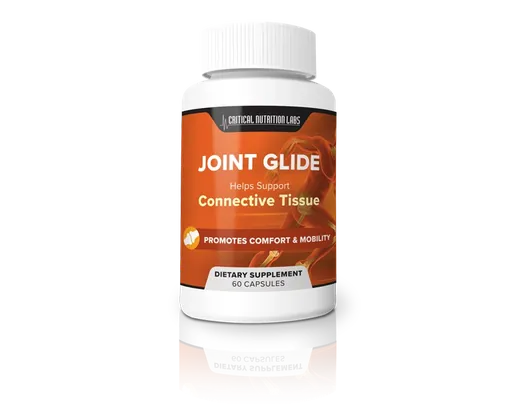
Joint Glide is a dietary supplement, not a drug, and it is not FDA approved. It is not intended to diagnose, treat, cure or prevent any disease.
Frequently asked questions
Can I take Joint Glide with aspirin?
Ask your doctor first. Willow bark belongs to the aspirin family of salicylates, so the two can stack.
Is Joint Glide safe with warfarin?
Talk to your doctor before starting. Glucosamine has been linked to more bleeding risk with warfarin, and willow bark is a salicylate.
Can teenagers take Joint Glide?
No. It is for adults 18 and over, partly because salicylates are linked to Reye's syndrome in children.
Is Joint Glide safe if I have a shellfish allergy?
The label does not state where the glucosamine comes from. Some glucosamine is made from shellfish shells, so ask the order desk and your doctor first.
Does Joint Glide affect the liver?
Liver data on the finished formula is not published. LiverTox does not link pine bark to liver injury. If you have liver disease, check with your doctor before starting.
What should I do if I react to Joint Glide?
Stop the capsules and call your doctor. For severe symptoms such as trouble breathing, call 911. Keep the bottle, and tell the order desk at +1 (727) 351-3065.
Our view
Joint Glide is not an alarming product, and it is not a risk-free one. At label amounts, the minerals sit well under their limits. The real cautions are about who takes it and what else they take.
Our plain advice: if you are healthy, over 18 and on no regular medicines, the main step is to follow the label and watch for stomach upset. If you take a blood thinner, aspirin, other pain relievers, or blood pressure or diabetes medicine, have the talk with your doctor or pharmacist first. If you are pregnant, nursing, under 18 or sensitive to aspirin, skip it.
Joint Glide is not FDA approved and is not a treatment for any condition. The guarantee is a purchase policy, not a medical promise.
Last updated