Science
What Is the ‘Rust Enzyme’ in Joint Glide Ads, and Is the Story Proven?
The “rust enzyme” is sales language for matrix metalloproteinases, or MMPs, enzymes that break down cartilage. A 2016 review of them is real, but it never tested Joint Glide or any of its ingredients. The label makes no claim about blocking enzymes, and no study in our sources shows that the capsule does.
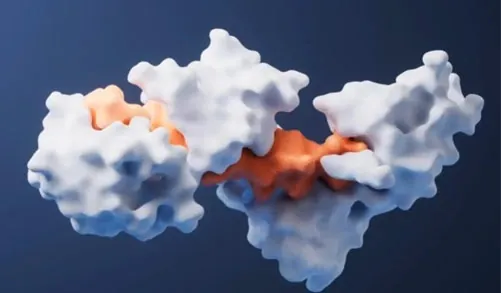
What is the rust enzyme story?
Some Joint Glide sales material says joint pain comes from a “rust enzyme”, and that the formula “blocks” it. It also says heavy metals drive the enzyme. These are the seller's own framing. They are not on the label, and nothing on the label proves them.
The story has a real scientific root, and that is why it sounds convincing. Enzymes called matrix metalloproteinases do take part in cartilage breakdown. But a real root does not make the whole tree true.
This post separates the real science from the sales language, so you can read the claim with open eyes.
Key facts about the rust enzyme claim
- “Rust enzyme” is the seller's name for matrix metalloproteinases, or MMPs.
- A 2016 review describes how MMPs become overactive in osteoarthritis.
- That review did not test Joint Glide or any of its ingredients.
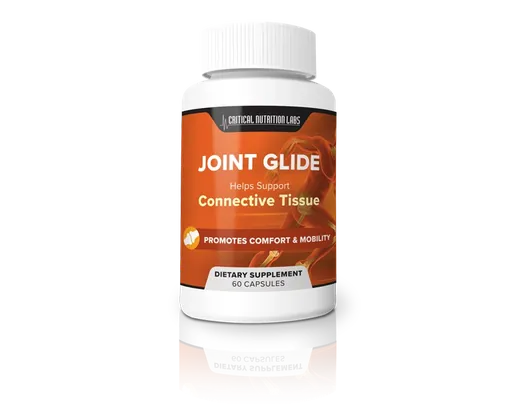
- The label claims only “Helps Support Connective Tissue” and “Promotes Comfort & Mobility”.
- No trial of the finished capsule has been published.
- Rust, hinges and keys in the sales video are pictures, not biology.
What is real about MMP enzymes?
The body keeps breaking down and rebuilding cartilage all the time. The breaking-down work is done by enzymes. A group called matrix metalloproteinases, or MMPs, cut up collagen and other cartilage parts.
A 2016 review describes how MMPs become overactive in osteoarthritis (Rose & Kooyman, 2016). The sales video shows this paper on screen. It is real, and it is listed by the National Library of Medicine. It is about cartilage biology.
Cartilage has no blood vessels, so it changes slowly. It takes in nutrients from joint fluid, and movement helps that fluid move in and out. Osteoarthritis is the condition in which joint tissues break down over time (CDC, Osteoarthritis).
What does that paper not show?
It does not mention Joint Glide. It does not test glucosamine, MSM, devil's claw, willow bark, pine bark or black pepper. It does not say a capsule can block an enzyme in a knee.
Using a real paper to support a product it never studied is a common sales move. It is not dishonest to cite background. It becomes misleading when the reader leaves thinking the product was tested.
| Claim in sales material | What our sources show |
|---|---|
| A rust enzyme causes joint pain | MMPs take part in cartilage breakdown in osteoarthritis. That is background research. |
| The formula blocks the enzyme | No study in our sources shows this for the capsule or its ingredients. |
| Heavy metals drive it | Not established by the label. No heavy-metal result has been published for Joint Glide. |
| Cartilage can be rebuilt in days | Marketing claim. The label makes no such claim. |
What do the rust and hinge pictures show?
The sales video explains joints with metaphors: a rusty hinge, a glowing key, frayed rope, golden spheres around a bone. They are illustrations. Joints do not rust, and no capsule oils them.
The pictures help a story land. They are not evidence. Treat each image as decoration, the same way you would treat a stock photo of a smiling person with a bottle.
If an image makes you feel something, check whether it also tells you something. A hinge that squeaks is not a knee that has a measured problem.
How is Joint Glide meant to work, without the story?
The plain idea is supply, not repair. Glucosamine and MSM are materials found in or near cartilage. Devil's claw, willow bark and pine bark are plants researchers have tested for comfort. Copper and zinc are used by enzymes that help form connective tissue (NIH ODS, Copper) (NIH ODS, Zinc).
That idea is modest, and it does not need a rust enzyme. Whether the doses are enough is the real question. Glucosamine is about 13% of the GAIT dose, and MSM is about 5-9% of trial doses. Pine bark matches a trial dose, though the trial used a different pine species.
What are the label, price and guarantee facts?
| Label claims | “Helps Support Connective Tissue” and “Promotes Comfort & Mobility”. No disease claims. |
|---|---|
| Serving | 2 capsules. A bottle holds 60 capsules, which is 30 servings. |
| 1 bottle | $69.00 plus $7.99 shipping, $76.99 total, on the order-page screenshot. |
| 3 and 6 bottles | Not published here. The prices are shown at checkout. |
| Guarantee | 60 days from purchase, unless the sales page prints a longer window. Claim by phone: +1 (727) 351-3065, with your order ID. |
| Returns | Mail to 3 Park Avenue, Floor 36, New York, NY 10016, USA with full name, email and order ID. Buyer pays return shipping. Use a tracked service. |
| Results timeline | Not published. No trial of the finished formula has been published. |
| Star rating and customer quotes | None published. None could be verified. |
| FDA status | Not FDA approved. No dietary supplement is. |
How can you read any supplement ad's science?
Find the claim on the label
Claims on the printed label are regulated wording. Claims in an ad can say anything.
Open the cited paper
Does the paper mention the product, or only the topic?
Check the dose
A trial result applies at the trial dose, not at a fraction of it.
Look for days and fixes
Promises of results in days, or of rebuilt cartilage, go beyond what a label may say.
When a fact is missing, the honest word is “not published”. We use it often on this site.
Frequently asked questions
What is the rust enzyme in Joint Glide ads?
It is the seller's name for matrix metalloproteinases, or MMPs, enzymes involved in cartilage breakdown.
Is the rust enzyme real?
MMP enzymes are real, and a 2016 review describes them in osteoarthritis. The review did not test Joint Glide or its ingredients.
Does Joint Glide block MMP enzymes?
No study in our sources shows that. The label makes no such claim.
Do heavy metals drive joint pain?
That is the seller's claim. It is not established by the label, and no heavy-metal result has been published for Joint Glide.
Can Joint Glide rebuild cartilage in days?
No. The label claims only support for connective tissue and comfort and mobility. It makes no rebuilding claim.
How should I judge Joint Glide, then?
By the label, the doses, your own weekly notes and the 60-day guarantee, not by the enzyme story.
Our view
The rust enzyme is a story built on a real paper. The paper is about cartilage biology. It says nothing about Joint Glide. That is the whole case.
We would not buy a supplement because of an enzyme story, and we would not avoid one for the same reason. The label, the doses and a fair test count for more. Use the story as background, nothing more.
Joint Glide is a dietary supplement. It is not FDA approved, and no supplement is. It is not intended to diagnose, treat, cure or prevent any disease. Talk to your doctor before you start, and send medical questions to a doctor, not to a sales page.
Last updated