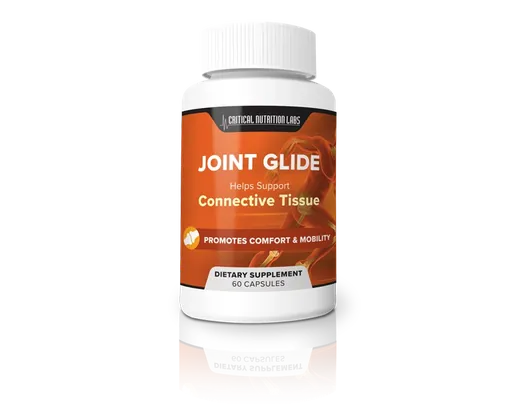
Ingredients
How Does the Pine Bark in Joint Glide Compare With the Knee Trials?
Pine bark is the one Joint Glide ingredient whose dose matches research. The label has 150 mg per serving, the same daily amount as two knee trials. The catch is the tree: those trials used French maritime pine, while Joint Glide names Pinus massoniana. Same dose, different species, no trial of the finished capsule.
Does Joint Glide's pine bark match the research?
On dose, yes. On species, no. That one sentence is the whole story, and the rest of this post explains it.
The Joint Glide label lists “Pine Bark Extract (Pinus massoniana) (std. to 95% proanthocyanidins)” at 150 mg per serving. Two trials in people with knee osteoarthritis gave 150 mg of pine bark extract a day. So the amount is the same.
The trials used an extract of French maritime pine, sold under the name Pycnogenol. Joint Glide uses a different tree. Extracts from different species can differ in their exact mix of compounds, so a result on one does not prove the same result on the other.
Key facts about pine bark in Joint Glide
- Joint Glide has 150 mg of pine bark extract per 2-capsule serving, standardized to 95% proanthocyanidins.
- Two knee trials used 150 mg a day of French maritime pine bark extract, Pinus pinaster.
- Joint Glide names Pinus massoniana, a pine native to China.
- Typical intake of pine bark extract runs 100 to 400 mg a day.
- Pine bark is not linked to liver injury, according to LiverTox.
- No trial of the finished Joint Glide capsule has been published.
What is pine bark extract?
Pine bark extract is a concentrate made from the bark, not ground bark itself. It supplies plant compounds called proanthocyanidins. These are chains built from small units, and they are the compounds labels use to standardize the extract.
The word “standardized” matters. The Joint Glide label says the extract is standardized to 95% proanthocyanidins. That tells you how concentrated the key compounds are, and it lets you compare with studies that report the same measure.
It is one of only two lines on the label, with black pepper extract, that state a standard. Devil's claw and white willow bark do not. That is a small point in the label's favor.
What did the two knee trials do?
Both trials gave 150 mg a day of pine bark extract to adults with knee osteoarthritis. One was published in Phytotherapy Research (Cisár et al., 2008). The other appeared in Nutrition Research (Farid et al., 2007). The title of the second says the supplement reduced pain and stiffness and improved physical function.
Trial length was about 3 months, which is longer than the 60-day guarantee window. We have not published the details of the study groups, so we do not describe them. Please open the linked abstracts to read the numbers yourself.
| Point | Knee trials | Joint Glide label |
|---|---|---|
| Daily amount | 150 mg | 150 mg per serving |
| Tree | French maritime pine, Pinus pinaster | Pinus massoniana |
| Length | About 3 months | Not applicable, no trial of the capsule |
| Standard | Proanthocyanidins | 95% proanthocyanidins |
Why does the pine species matter?
Because plants are not interchangeable. A tree grown in one place and a tree grown in another can hold a different mix of compounds. A trial result belongs to the extract that was tested.
This is a general rule for any herbal ingredient, and the checklist on this site lists it as a point to check: the species in the study should match the species in the product. Pine bark in Joint Glide earns a partial mark here. The dose matches. The tree does not.
Nothing in our sources shows that Pinus massoniana is worse. We simply have no trial of it at this dose. “Unknown” is the fair word.
Is pine bark extract safe?
LiverTox reports that pine bark is not linked to liver injury (LiverTox, Pine bark). Typical intake runs 100 to 400 mg a day, so 150 mg sits inside that range.
That is a statement about pine bark alone. Joint Glide holds nine other lines, and the cautions for the capsule come mostly from white willow bark, glucosamine and devil's claw. White willow bark is a salicylate, the aspirin family. Devil's claw may affect blood pressure and blood sugar.
Skip the capsule if you are under 18, pregnant or nursing, or sensitive to aspirin. Ask a doctor first if you take a blood thinner or have a medical condition.
What are the label, price and guarantee facts?
| Serving | 2 capsules. A bottle holds 60 capsules, which is 30 servings. |
|---|---|
| Label claims | “Helps Support Connective Tissue” and “Promotes Comfort & Mobility”. No disease claims. |
| 1 bottle | $69.00 plus $7.99 shipping, $76.99 total, on the order-page screenshot. |
| 3 and 6 bottles | Not published here. The prices are shown at checkout. |
| Guarantee | 60 days from purchase, unless the sales page prints a longer window. Claim by phone: +1 (727) 351-3065, with your order ID. |
| Returns | Mail to 3 Park Avenue, Floor 36, New York, NY 10016, USA with full name, email and order ID. Buyer pays return shipping. Use a tracked service. |
| Refund timing | 3-5 business days after the returned bottles are credited, then 5-10 days for your card issuer to post it. |
| Results timeline | Not published. No trial of the finished formula has been published. |
| FDA status | Not FDA approved. No dietary supplement is. |
How should you judge the pine bark line?
What speaks for it
- The dose matches two knee trials.
- The label states a 95% proanthocyanidin standard.
- The amount sits within the typical intake range.
What speaks against it
- The trials used a different pine species.
- No trial of the finished capsule exists.
- The trials lasted longer than the guarantee window.
The fair summary is “closest match, not a match”. If you give the capsule a try, keep notes, and judge it on how your own days feel.
Frequently asked questions
How much pine bark is in Joint Glide?
Each 2-capsule serving has 150 mg of pine bark extract, Pinus massoniana, standardized to 95% proanthocyanidins.
Is Joint Glide's pine bark the same as Pycnogenol?
No. Pycnogenol is an extract of French maritime pine, Pinus pinaster. Joint Glide names Pinus massoniana, a different pine species.
Does the pine bark dose match research?
Yes on amount. Two knee trials used 150 mg a day. The trials used the other pine species, so the match is partial.
Is pine bark safe for the liver?
LiverTox reports that pine bark is not linked to liver injury. Nobody has published liver data on the finished Joint Glide formula.
Did the trials last as long as the guarantee?
No. The knee trials ran about 3 months, while the guarantee window is 60 days from purchase.
Who should skip Joint Glide?
Skip it under age 18, in pregnancy or while nursing, and with aspirin sensitivity. Ask a doctor first if you take a blood thinner.
Our view
Pine bark is the bright spot on this label. The dose is right, the standard is printed and the safety note is calm. The one open question is the tree.
We would not call it proof, because the trials used another species and no one has tested the capsule. We would call it the most research-aware line in the formula. Judge the whole capsule by your own notes, inside the guarantee, with a doctor in the loop.
Joint Glide is a dietary supplement. It is not FDA approved, and no supplement is. It is not intended to diagnose, treat, cure or prevent any disease. Talk to your doctor before you start, and send medical questions to a doctor, not to a sales page.
Last updated