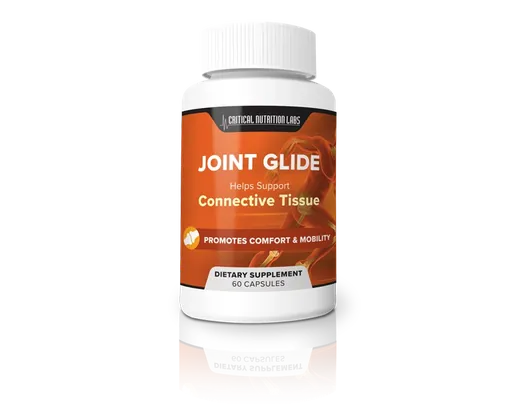
Evidence
Does Joint Glide Really Work? What the Evidence Can and Cannot Say
Nobody can say for sure. No trial of the finished Joint Glide capsule has been published. Research exists on single ingredients, often at doses larger than the label holds. Pine bark matches a trial dose, while glucosamine and MSM do not. The 60-day guarantee lets you judge it for yourself.
Does Joint Glide work?
The honest answer is that no one knows, and anyone who says otherwise is guessing. No clinical trial of the finished Joint Glide formula has been published. That is true whether you ask the seller, the label or the research record.
What exists is a pile of studies on single ingredients. Some were small. Some used doses far above what a Joint Glide capsule holds. Some used a different species of plant. A study of one ingredient at one dose cannot tell you what ten ingredients at smaller doses will do together.
So the useful question is not "does it work?" but "what does the evidence say, and how can I test it for myself?" The rest of this post takes those two parts in turn.
Key facts about whether Joint Glide works
- No trial of the finished Joint Glide formula has been published.
- Pine bark, 150 mg, matches the dose in two knee trials. Those trials used a different pine species.
- Glucosamine is about 13% of the GAIT dose. MSM is about 5 to 9% of trial doses.
- Devil's claw and willow bark cannot be checked, because harpagoside and salicin are not stated.
- No results timeline is published. Judge it inside the 60-day guarantee.
- The label claims support and comfort only. It does not claim to treat any disease.
What would "work" even mean for a joint supplement?
The label sets a low bar on purpose. It claims to help support connective tissue and to promote comfort and mobility. It does not claim to treat arthritis, remove pain or rebuild cartilage.
That wording is how the rules for supplements are meant to work. A product may describe how a nutrient supports the body, as long as it does not claim to treat a disease. So "working" for Joint Glide would mean something modest, such as everyday movement feeling a little easier over several weeks.
Even that is hard to measure by feel. Weather, sleep, activity and a new pair of shoes can all change how your knees feel. Later we show a simple way to separate the signal from the noise.
What does the research say about each ingredient?
Here is a plain summary, one ingredient at a time. These are single-ingredient studies, not tests of Joint Glide.
Pine bark, 150 mg
Two knee trials used 150 mg a day (Cisár et al., 2008)(Farid et al., 2007). They used French maritime pine, not the species on the label.
Glucosamine, 200 mg
The largest trial used 1,500 mg a day and found no significant pain benefit overall (Clegg et al., 2006). NCCIH calls the evidence uncertain (NCCIH, Glucosamine).
MSM, 300 mg
Two knee trials used gram-level doses and saw modest changes (Kim et al., 2006)(Debbi et al., 2011).
Devil's claw, 500 mg
A Cochrane review found possible short-term back pain benefit with harpagoside extracts, rated low quality (Oltean et al., 2014).
White willow bark, 150 mg
Helped in a back pain trial (Chrubasik et al., 2000) and showed no relevant benefit for hip or knee osteoarthritis in another (Biegert et al., 2004).
Black pepper, 10 mg
Piperine changed how curcumin was absorbed in people (Shoba et al., 1998). It is not a joint ingredient on its own.
Pine bark looks best on dose. Everything else is either far below the studied amount, or cannot be compared because the active compound is not on the label.
How far do the Joint Glide doses sit from the trial doses?
This table sets each label amount against the dose used in research. A result near 100% would be a match. Where the label gives no active compound, no match can be made.
| Ingredient | Joint Glide label | Research dose | How it compares |
|---|---|---|---|
| Glucosamine hydrochloride | 200 mg | 1,500 mg a day (GAIT) | About 13% of the trial dose |
| MSM | 300 mg | 3,375 to 6,000 mg a day | About 5-9% of trial doses |
| Devil's claw root powder | 500 mg (harpagoside not stated) | Extracts giving 50-100 mg harpagoside a day | Cannot be checked |
| White willow bark extract | 150 mg (salicin not stated) | Extracts giving 120-240 mg salicin a day | Cannot be checked |
| Pine bark extract | 150 mg (Pinus massoniana) | 150 mg a day (Pinus pinaster) | Same dose, different pine species |
| Black pepper extract | 10 mg (about 9.5 mg piperine) | 20 mg piperine in an absorption study | About half |
You cannot close these gaps by taking extra capsules. More capsules raise every ingredient at once, including the copper and the willow bark. Follow the label.
How does Joint Glide work, in theory?
The idea behind the formula is supply, not repair. Glucosamine and MSM are raw materials found in or near cartilage. Devil's claw, willow bark and pine bark are plants that researchers have tested for comfort. Copper and zinc are used by enzymes that help form connective tissue (NIH ODS, Copper)(NIH ODS, Zinc).
You may also see a story about a "rust enzyme" in some sales material. The real science behind it is a 2016 review of matrix metalloproteinases, enzymes that break down cartilage in osteoarthritis (Rose & Kooyman, 2016). That paper never tested Joint Glide or its ingredients. It explains cartilage biology. It is background, not proof.
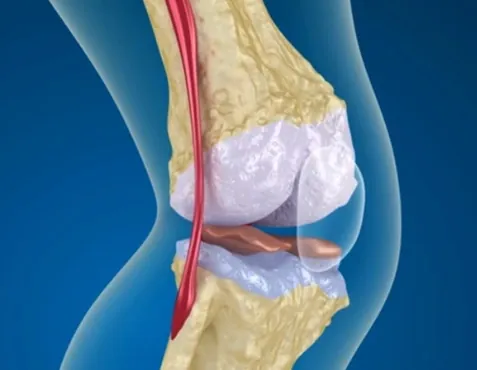
Cartilage itself changes slowly. It has no blood vessels, so it gets nutrients from the fluid around it. Movement helps that fluid move in and out. That is one reason activity matters more than any capsule.
How can you test Joint Glide for yourself?
Run a fair test. The 60-day money-back guarantee is built for this, and a few habits make the result easier to read.
- Before day 1
Write down your starting point. How far you walk, how a flight of stairs feels, how long morning stiffness lasts.
- Days 1 to 14
Build the habit. Take your 2 capsules each morning with a full glass of water, 8 oz, and a little food. Jot down any stomach upset.
- Days 15 to 50
Change nothing else. Compare your notes with your starting point once a week and look for trends, not single days.
- Days 51 to 60
Decide. To return it, phone +1 (727) 351-3065 with your order ID before the 60 days end.
A single bottle lasts 30 days, so only the 3-bottle and 6-bottle packs last through the full window. For a longer plan see How long does Joint Glide take to work?.
What does more for your joints than any capsule?
Movement does. The CDC says regular physical activity can ease joint pain and improve function in people with arthritis, and it suggests about 150 minutes of moderate activity a week plus 2 days of strength work (CDC, Activity and arthritis). Weight, sleep and supportive shoes help too.
A joint that is hot, red or badly swollen, pain after a fall or twist, a joint that locks or gives way, or joint pain with fever needs an exam, not a supplement trial.
Joint Glide is a dietary supplement. It is not FDA approved, it is not a pain medicine, and it should never replace care from a doctor or physical therapist.
Frequently asked questions
Is there proof that Joint Glide works?
No. No trial of the finished formula has been published, and the research covers single ingredients at doses that often differ from the label.
Which Joint Glide ingredient has the best dose match?
Pine bark extract. Its 150 mg matches the daily amount in two knee trials, although those trials used French maritime pine.
Do joint supplements work in general?
The evidence is mixed. The largest glucosamine trial found no significant pain benefit overall, and the NCCIH calls the evidence for glucosamine uncertain.
Can I take more capsules to reach the trial doses?
No. Stick to 2 capsules a day. Extra capsules would also raise the copper and the willow bark past sensible levels.
Is the rust enzyme story proven?
No. The 2016 review behind it describes cartilage enzymes in osteoarthritis. Nobody tested Joint Glide or its ingredients in that paper.
What should I do if Joint Glide does not help?
Call +1 (727) 351-3065 with your order ID before day 60 and use the money-back guarantee. The buyer pays return shipping.
Our view
We cannot tell you that Joint Glide works. We can tell you that the label is open, one ingredient matches a trial dose, two famous ones are small, and two cannot be checked.
For a healthy adult who likes a simple morning capsule, that may be enough to try it with the refund window as a safety net. For someone hoping for a fix, it is not. Movement, a healthy weight and a doctor's advice carry more weight than this or any supplement.
Joint Glide is not FDA approved and is not intended to diagnose, treat, cure or prevent any disease. Talk to a doctor before you start if you take medicines, and keep a short log so your own notes, not a sales page, decide the answer.
Last updated