Joint support
Do Joint Supplements Help Arthritis, Knees and Cartilage? Where Joint Glide Fits
The evidence for joint supplements is mixed, and no supplement has been shown to rebuild cartilage. Joint Glide does not claim to treat arthritis. Its label says only that it helps support connective tissue and promotes comfort and mobility. Activity, strength work and a doctor's advice carry more weight than any capsule.
What is arthritis, in plain terms?
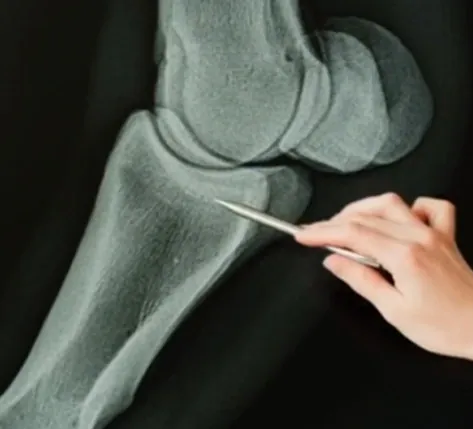
The most common kind of arthritis is osteoarthritis. In it, the tissues of a joint wear down over time, and one joint or several may be affected (CDC, Osteoarthritis). Knees, hips, hands and the lower back are frequent sites.
Growing older, an earlier injury, extra body weight and family history all make it more likely. Common signs include pain, stiffness after rest and a smaller range of motion. Stairs and low chairs are often where people first notice it.
A doctor makes the diagnosis. A supplement cannot confirm it, rule it out or manage it. That is why this post talks about support and comfort, and never about treatment.
Can cartilage grow back, and do cartilage supplements work?
Cartilage is the smooth, rubbery layer on the ends of bones in a joint. It has no blood vessels of its own, so it gets nutrients from the joint fluid around it. That is one reason it repairs itself very slowly.
Nothing in a bottle has been shown to rebuild it. Movement helps, because loading and bending a joint moves fluid in and out of the cartilage, a bit like a sponge. Sitting for hours gives it less of that motion.
Searches like "do cartilage supplements work" or "best cartilage supplement" invite a bold answer. The honest one is that the research is mixed and often uses doses larger than most capsules hold.
Key facts on joint supplements and arthritis
- Osteoarthritis is diagnosed by a doctor. A supplement cannot confirm or manage it.
- No supplement has been shown to rebuild cartilage.
- The biggest glucosamine trial used 1,500 mg a day and found no significant pain benefit overall.
- Activity, strength work and a healthy weight have strong support. Supplements are weak to mixed.
- Joint Glide claims support and comfort only. It does not claim to treat arthritis.
- Ask a doctor first if you take a blood thinner, aspirin or other pain relievers.
What does the research say about the ingredients?
| Ingredient | What research looked at | What it found |
|---|---|---|
| Glucosamine | 1,500 mg a day for painful knees, 24 weeks (Clegg et al., 2006) | No significant pain benefit overall; NCCIH calls the evidence uncertain (NCCIH, Glucosamine) |
| MSM | 3.4 to 6 g a day for knee comfort (Kim et al., 2006)(Debbi et al., 2011) | Modest changes; the 3.4 g trial found gains of unclear clinical value |
| Devil's claw | Harpagoside extracts for back pain (Oltean et al., 2014) | Possible short-term benefit, low-quality evidence |
| White willow bark | 120 to 240 mg salicin a day (Chrubasik et al., 2000)(Biegert et al., 2004) | Helped in a back pain trial; no relevant benefit in hip and knee osteoarthritis |
| Pine bark | 150 mg a day of a different pine species for knee stiffness (Cisár et al., 2008)(Farid et al., 2007) | Studied for stiffness and function in knee trials |
| Black pepper | 20 mg piperine in an absorption study (Shoba et al., 1998) | Changed how another compound was absorbed |
This is why we do not tell you that joint supplements help arthritis. Some studies saw small changes, and the biggest glucosamine trial did not. The sensible reading is: uncertain, and dose-dependent.
Which joint habits have the strongest support?
| Habit | What to aim for | Strength of support |
|---|---|---|
| Moderate activity | About 150 minutes a week, such as brisk walks, cycling or swimming (CDC, Activity and arthritis) | Strong |
| Strength work | 2 days a week for the legs, hips and core | Strong |
| Healthy weight | Less body weight means less load on knees and hips | Strong |
| Sleep | 7 or more hours; poor sleep can make pain feel worse | Moderate |
| Footwear | Cushioned, stable shoes that fit; replace worn soles | Moderate |
| Supplements | Optional, after the habits above | Weak to mixed |
The CDC says physical activity can ease joint pain and improve function in people with arthritis. A 30-minute walk on five weekdays reaches the 150-minute goal. Short 10-minute blocks add up too.
What does Joint Glide claim, and not claim?
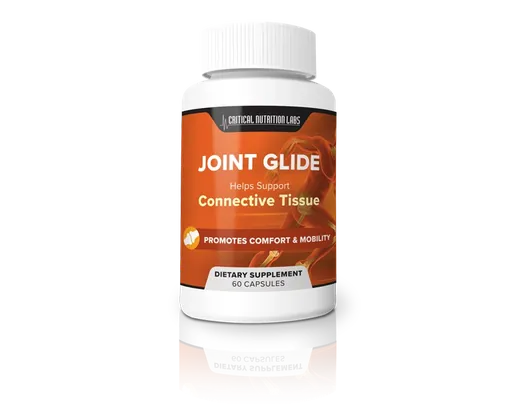
It makes two claims: "Helps Support Connective Tissue" and "Promotes Comfort & Mobility." Connective tissue means cartilage, tendons and ligaments. The claims describe support and comfort. They do not name arthritis, and they do not promise relief from joint pain.
The words "joint glide arthritis" and "joint glide joint pain" appear in searches, and some marketing around the product is louder than the label. We hold to the label. Joint Glide does not treat arthritis or any other disease, does not claim to rebuild cartilage and does not replace medicine or physical therapy.
Do not drop a prescribed medicine or physical therapy to try a supplement. Ask your doctor first if you take a blood thinner, aspirin or other pain relievers.
Is Joint Glide a supplement for knee pain?
It is a general joint formula, not a knee product. The one dose match with knee research is the 150 mg of pine bark, and those trials used a different pine species. The label makes no knee claim.
If you search for "supplement for knee pain" or "best supplement for knee pain," no one can honestly name a best. What we can do is show how to compare. See Is Joint Glide worth it? for the ten-point checklist.
For flexibility and mobility, daily movement is still the main tool. A short routine of ankle circles, seated knee extensions, sit-to-stands and an easy walk takes about 10 minutes. Stop any move that brings on sharp pain.
When should you see a doctor instead?
See a doctor promptly if a joint looks or feels different, not just stiff. New swelling, redness, warmth or a fresh injury calls for a proper exam. So do a swollen, red or hot joint, pain after a fall or twist, a joint that locks or gives way, or joint pain with fever.
A doctor or physical therapist can also design an exercise plan around your joints, and that plan beats any product. Joint Glide is a dietary supplement, is not FDA approved and is for healthy adults 18 and over.
Frequently asked questions
Do joint supplements help arthritis?
The evidence is mixed. The largest glucosamine trial found no significant pain benefit overall, and no supplement has been shown to rebuild cartilage.
Does Joint Glide treat arthritis?
No. Joint Glide is a dietary supplement. It is not meant to diagnose, treat or prevent any disease.
Can cartilage grow back?
Adult cartilage heals very slowly because it has no blood supply, and no supplement has been shown to rebuild it.
Does walking help sore knees?
For most people, yes. The CDC says steady activity can ease joint pain and improve function in people with arthritis. Begin with short walks and add time.
Which Joint Glide ingredient best matches knee research?
Pine bark extract. Its 150 mg equals the daily dose in two knee trials, though they used a different pine species.
Is a supplement necessary for joint support?
No. Habits come first, and any supplement is optional. Check its doses against the research before buying.
Our view
We think the honest answer on arthritis is also the most useful one. Supplements have uncertain evidence, and the habits with strong support are free: move most days, build strength, mind your weight and sleep well.
Joint Glide fits as an optional add-on to those habits, for a healthy adult who wants a simple morning capsule. It makes modest claims, discloses every amount and carries a 60-day guarantee. It does not treat arthritis, and it should never stand in for a doctor.
If joint pain is new, severe or getting worse, see a clinician first. Then, if you and your doctor agree, a supplement can sit at the bottom of the plan.
Last updated